Why Know How to Identify High Quality Cookware?

Time:2026-10-12 Author:Henry
0%

Why know how to identify high quality cookware? The answer reaches beyond appearance, weight, or a polished product description. Grand View Research’s Cookware Market Size, Share & Trends Analysis Report identifies cookware as a growing global consumer market, reflecting stronger interest in durable, practical kitchen products. However, market growth does not guarantee product quality. A popular pan can still develop hot spots, loosen its handle, or wear quickly under daily cooking conditions.

Reliable evaluation begins with evidence. Check the material, construction method, base thickness, heat compatibility, and handle attachment. A stainless-steel pan should feel balanced, not simply heavy. Its base should sit flat on the cooking surface. For coated cookware, inspect the manufacturer’s care instructions and coating claims carefully. The U.S. Food and Drug Administration’s Food Code 2022 provides a useful safety reference for food-contact equipment, while NSF/ANSI 51 addresses materials and finishes used in commercial food equipment.

Small details matter.

Look for clear manufacturer information, batch traceability, warranty terms, and temperature limits. Independent testing is more convincing than vague claims such as “professional grade.” Fortune Business Insights’ Cookware Market report also shows how product categories continue expanding, including nonstick, stainless steel, and specialty cookware. That variety makes comparison harder. It may also encourage rushed decisions.

In practice, learning how to identify high quality cookware requires using the pan, not admiring it. Notice whether food browns evenly, whether the lid seals properly, and whether the handle stays secure after repeated washing. No single feature proves excellence. Even experienced buyers can mistake weight for durability, so careful testing and documented standards remain essential.
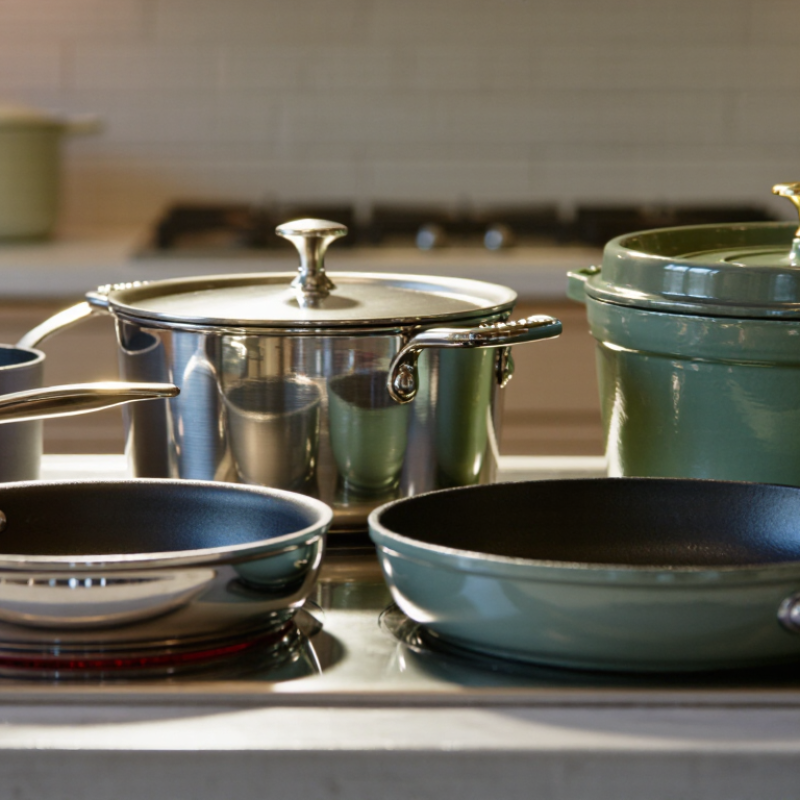
Why Know How to Identify High Quality Cookware?

What Defines High-Quality Cookware?

High-quality cookware begins with honest materials and careful construction. A solid pan feels balanced, not awkwardly heavy. Its base should sit flat on the stovetop without wobbling. Thick, even walls usually distribute heat better, reducing burnt edges and undercooked centers. Look for clear information about the metal, coating, heat limits, and compatible cookers.

The handle matters too. It should remain secure when the pan is full, with a grip that feels stable near a hot stove. Smooth joints are easier to clean and less likely to trap food. A durable cooking surface should resist ordinary utensils, but no coating lasts forever. Follow the care instructions, even when they seem inconvenient. Heat performance can also reveal quality. When oil warms evenly across the surface, cooking becomes more predictable.

I once trusted weight alone.

That was a mistake.

A very heavy pan may heat slowly or strain your wrist. I now test balance, heat response, and cleaning effort together. Reliable cookware should have understandable specifications and, when available, independent safety testing. Claims about “professional” performance mean little without evidence. Small flaws still matter: a loose lid, sharp rim, or uneven base can worsen with use. High-quality cookware is not necessarily perfect, but it should perform consistently, stay safe under stated conditions, and age honestly through regular cooking.

How to Evaluate Cookware Materials and Construction

Evaluating cookware starts with material, not shine. ASM International’s ASM Handbook lists approximate thermal conductivity at room temperature: copper near 390 W/m·K, aluminum near 205, and austenitic stainless steel around 14–16. These figures explain why aluminum and copper spread heat faster. Alloy, thickness, and bonding still matter. Heat moves unevenly otherwise.

Construction determines how those materials behave on a stove. I inspect the base with a straightedge, then check whether it rocks. A bonded aluminum core usually distributes heat better than thin, single-layer stainless steel. Look underneath. The base should sit flat, without sharp edges or visible gaps. Handles should feel rigid, and rivets should not move under moderate pressure. The FDA Food Code 2022 describes food-contact equipment as smooth, durable, corrosion-resistant, and easy to clean. Those are practical benchmarks, not decoration.

Performance also needs measured thinking. USDA FSIS recommends 165°F (74°C) for poultry, but a pan cannot guarantee safe cooking. Uneven heating can create pale centers beside scorched edges. I use an infrared thermometer, although its readings can be misleading on shiny surfaces. That is an imperfect test. NSF/ANSI 51 offers material and finish criteria for food equipment, but compliance alone does not prove excellent heat control. A well-made pan balances conductivity, thickness, flatness, and cleanability. Price remains a weak quality signal.

Why Heat Distribution and Temperature Control Matter

Why Know How to Identify High Quality Cookware?

Why Heat Distribution and Temperature Control Matter

High quality cookware should spread heat evenly across its cooking surface. A pan with thin spots may create hot areas near the burner. Food can scorch there while remaining pale elsewhere. I have seen this happen with onions, especially during slow browning. The center darkened before the edges softened.

Good heat distribution gives you more control. It helps maintain a steady simmer and reduces sudden temperature changes. This matters when cooking sauces, eggs, fish, or delicate vegetables. Stable cookware also responds predictably when you lower the heat. That predictability supports better cooking decisions, not just better equipment.

Tips: Preheat gradually, then test the surface with a few drops of water. They should sizzle gently, not vanish instantly. Use a moderate setting before increasing the heat. Match the pan size to the burner. Uneven contact can waste heat and create hot edges. A kitchen thermometer can reveal problems your eyes miss.

Temperature control is not only about the pan. Burner strength, ingredient temperature, and cooking time also affect results. I sometimes blame the cookware too quickly. That is a mistake worth noticing. Even a well-made pan can perform poorly when overcrowded or heated empty for too long. Look for a stable base, comfortable weight, and a surface that remains level after repeated use.

Why Know How to Identify High-Quality Cookware?

Heat distribution and temperature control depend strongly on a cookware material’s thermal conductivity. Higher conductivity generally allows heat to spread more quickly and evenly across the cooking surface, while lower conductivity can create hotter and cooler zones.

Representative thermal conductivity values at approximately room temperature; actual values vary with alloy composition, temperature, and cookware construction. Unit: watts per meter-kelvin (W/m·K).

How Durability, Safety, and Maintenance Affect Quality

High-quality cookware is more than a heavy handle or polished surface. In daily cooking, durability affects heat control, comfort, and replacement costs. I once trusted weight alone, but a heavy pan can still warp. A flat base, firm handle, and even wall thickness matter more over time. The U.S. Environmental Protection Agency’s 2023 Wasted Food Research estimated 66.2 million tons of food waste came from U.S. retail, food service, and residential sources in 2019. Durable cookware cannot solve food waste, but reliable heat can reduce burning, sticking, and failed meals.

Safety also depends on material condition and maintenance. The FDA Food Code 2022 describes food-contact surfaces as smooth, durable, nonabsorbent, and easy to clean. Scratches, chipped coatings, loose rivets, and deep stains deserve attention. The World Health Organization’s 2015 global foodborne disease estimates reported about 600 million illnesses and 420,000 deaths annually. Cookware is not the only risk, but cleanable surfaces support safer habits. Hand washing, complete drying, and gentle utensils help preserve the cooking surface. I sometimes over-clean pans, which can damage finishes; that mistake is easy to repeat.

Tips: Check the base on a flat counter. It should not rock. Read care instructions before first use. Avoid sudden temperature changes. Replace cookware when handles loosen or surfaces begin flaking. Inspect it under bright light, not only during busy cooking.

How to Choose Cookware for Your Cooking Needs

Choosing cookware for your cooking needs starts with your stove, meals, and daily habits. A heavy stainless-steel pan may suit searing, while a responsive aluminum pan helps with delicate sauces. For soups, choose a deep pot with sturdy handles. Measure your cooktop first. Oversized cookware can heat unevenly.

Energy use also matters. The U.S. Department of Energy reports that induction cooking transfers about 85% of its energy to cookware, compared with roughly 32% for gas. This difference can influence your choice if you cook often or want better heat control. Check whether your pans work with induction before purchasing. A simple magnet test helps, though it is not perfect.

Material quality affects durability and maintenance. Stainless steel resists corrosion, while cast iron stores heat for longer cooking. Nonstick surfaces can reduce oil use, but they need gentle utensils and controlled temperatures. The U.S. Food and Drug Administration evaluates food-contact materials under safety requirements, yet care still depends on the user. I once chose a large pan because it looked practical. It was difficult to lift when full. That mistake changed how I judge cookware: handle comfort, weight, lid fit, and cleaning effort matter as much as appearance. Look for even bases, secure rivets, and clear care instructions. Small details matter.

Why Know How to Identify High Quality Cookware? - How to Choose Cookware for Your Cooking Needs
Cookware Type Approximate Thermal Conductivity Heat Response Heat Retention Induction Compatibility Typical Oven Suitability Main Advantages Limitations Best Cooking Uses
Stainless Steel About 14–16 W/m·K for common stainless steel Moderate to slow Moderate Only when the base contains a magnetic layer Often suitable; check the handle, lid, and manufacturer temperature limit Durable, corrosion-resistant, non-reactive with acidic foods, and easy to maintain By itself, it distributes heat less evenly than aluminum or copper Searing, sautéing, pan sauces, boiling, and general-purpose cooking
Aluminum About 205–235 W/m·K Fast Low to moderate Usually not compatible unless designed with a magnetic base Commonly suitable, but handles and nonstick coatings may limit temperature Lightweight, affordable, and highly responsive to temperature changes Can react with strongly acidic or alkaline foods when uncoated; may scratch or warp if thin Pancakes, eggs, vegetables, quick sautéing, and everyday cooking
Hard-Anodized Aluminum Aluminum-based; the anodized surface improves hardness Fast Low to moderate Usually not compatible unless fitted with a magnetic base Often suitable; verify the coating, handle, and lid specifications Lightweight, harder than untreated aluminum, and generally resistant to surface wear May not work on induction; abrasive cleaners can damage the finish Daily sautéing, roasting, stir-frying, and low-fat cooking
Cast Iron About 50–80 W/m·K Slow Very high Yes Usually suitable for high-temperature oven cooking; check handle materials Excellent heat retention, strong searing performance, and long service life when maintained Heavy, slow to heat and cool, and vulnerable to rust without proper seasoning or care Steaks, braising, roasting, frying, cornbread, and high-heat cooking
Carbon Steel About 45–60 W/m·K Faster than cast iron High Yes Usually suitable for stovetop-to-oven cooking; check handle construction Strong, lighter than cast iron, responsive, and capable of developing a natural seasoning layer Requires seasoning and drying; acidic foods can affect the seasoning layer Stir-frying, searing, omelets, pancakes, and high-heat sautéing
Copper About 390–400 W/m·K Very fast and precise Low to moderate Usually not compatible unless designed with a magnetic layer Often suitable, but lining, handle, and temperature limits must be checked Exceptional temperature control and highly even heat distribution Expensive, requires polishing if an exterior shine is desired, and usually needs a non-reactive lining Delicate sauces, confectionery, caramel, reductions, and precision cooking
Ceramic-Coated Nonstick Depends on the underlying metal, commonly aluminum Usually fast Low to moderate Depends on the base construction Varies by coating and handle; many models require moderate temperatures Easy food release, simple cleanup, and useful for cooking with little oil Coating performance can decline with overheating, metal utensils, or abrasive cleaning Eggs, fish, pancakes, vegetables, and other delicate foods
Traditional Nonstick Depends on the underlying metal, commonly aluminum Usually fast Low to moderate Depends on the base construction Often limited to moderate temperatures; follow the coating instructions Excellent release properties and convenient cleanup Not ideal for intense searing; the coating can wear from overheating, scratching, or misuse Eggs, crepes, pancakes, fish, and low-fat cooking
Enameled Cast Iron Cast-iron body; the enamel is a glass-like protective coating Slow Very high Yes, when the base is cast iron Usually suitable, but avoid sudden temperature changes and follow lid limits Excellent heat retention, non-reactive cooking surface, and no seasoning requirement Heavy; enamel can chip if dropped or exposed to thermal shock Soups, stews, braises, slow roasting, and acidic recipes
Quality checklist: Look for a flat, stable base; even thickness; secure handles; smooth, intact cooking surfaces; tight-fitting lids; clear care instructions; and compatibility with your cooktop. Thermal conductivity values are approximate and vary with alloy, thickness, cladding, and construction.

FAQS

Which cookware materials spread heat most effectively?

Copper and aluminum spread heat quickly. Stainless steel spreads heat more slowly. Thickness and bonding still matter.

How can I check whether a pan is well constructed?

Place it on a flat counter. It should not rock. Look for a flat base, firm handles, and tight rivets.

Does a heavy pan always indicate better quality?

No. Weight can mislead. A heavy pan may still warp or become difficult to lift when full.

What temperature helps poultry cook safely?

Poultry should reach 165°F, or 74°C. A pan cannot guarantee safe cooking. Check the thickest part with a thermometer.

Can an infrared thermometer measure cookware accurately?

It can help, but shiny surfaces may distort readings. Matte tape can improve the test. The result remains imperfect.

What damage means cookware may need replacement?

Replace cookware with loose handles, moving rivets, deep scratches, chipped surfaces, or flaking finishes. Do not ignore small failures.

How should cookware be cleaned and maintained?

Wash it by hand when appropriate. Dry it completely. Use gentle utensils and avoid sudden temperature changes.

How do I choose cookware for my stove and meals?

Measure your cooktop first. Choose deep pots for soups and responsive pans for delicate sauces. Oversized cookware may heat unevenly.

Is induction cooking more energy-efficient than gas cooking?

Induction transfers roughly 85% of energy to cookware, while gas transfers about 32%. Check compatibility with a magnet, but that test is imperfect.

What details matter beyond appearance?

Check handle comfort, lid fit, cleaning effort, base flatness, and wall thickness. Shine can hide weaknesses. Small details matter.

Conclusion

Understanding how to identify high quality cookware helps you invest in tools that perform reliably and last for years. High-quality cookware is defined by sturdy construction, balanced weight, secure handles, and materials that suit your cooking style. When evaluating a pan or pot, consider the thickness and consistency of its base, the quality of its interior surface, and whether it feels stable and comfortable to use. Good construction should support even heat distribution, reduce hot spots, and allow precise temperature control for better cooking results.

Durability, safety, and maintenance are also important signs of quality. Cookware should resist warping, corrosion, and surface damage while remaining easy to clean and safe for regular use. Choose pieces according to your needs, such as size, cooking method, stovetop compatibility, and storage space. By comparing materials, construction, heat performance, care requirements, and practical design, you can select cookware that offers dependable results and long-term value.

Henry

Henry

Henry is a dedicated marketing professional with a profound expertise in the company's offerings. With years of experience in the industry, he possesses an impressive understanding of the market dynamics and consumer behaviors that drive success. Henry is committed to sharing his insights through......