Top 10 Ways Cookware Influences Cooking Efficiency

Time:2026-10-02 Author:Madeline
0%

Cookware quietly determines how much heat reaches the food, how quickly temperatures recover, and how much energy disappears around the pan. That is the practical answer to “how does cookware influence cooking efficiency?” A thin aluminum skillet may heat rapidly, but it can create hot spots beneath a delicate fish fillet. A heavy, flat-bottomed pan spreads heat more steadily. You can feel the difference when onions soften evenly instead of scorching at the center.

Harold McGee, the food scientist and author of On Food and Cooking, describes a pan as “a heat reservoir.” That compact idea explains why material, thickness, surface contact, and lid design matter. The U.S. Department of Energy reports that induction cooking transfers roughly 85% of its energy to cookware, compared with about 32% for gas. ENERGY STAR guidance also links efficient cooking with correctly sized pans, tight-fitting lids, and suitable burner settings. These details sound ordinary. They are not.

Our Top 10 Ways Cookware Influences Cooking Efficiency examines heat transfer, preheating, thermal recovery, pan size, coatings, lids, and maintenance. It also considers cooking speed and energy use together, because they are not always identical. A fast pan may waste heat. A durable pan may demand longer preheating. No cookware wins every test. That is the imperfect part worth questioning. Real kitchens contain warped burners, crowded counters, rushed decisions, and recipes that ignore pan shape. The strongest conclusions therefore combine laboratory data, manufacturer specifications, and hands-on observation. Expect useful principles, not magical promises.
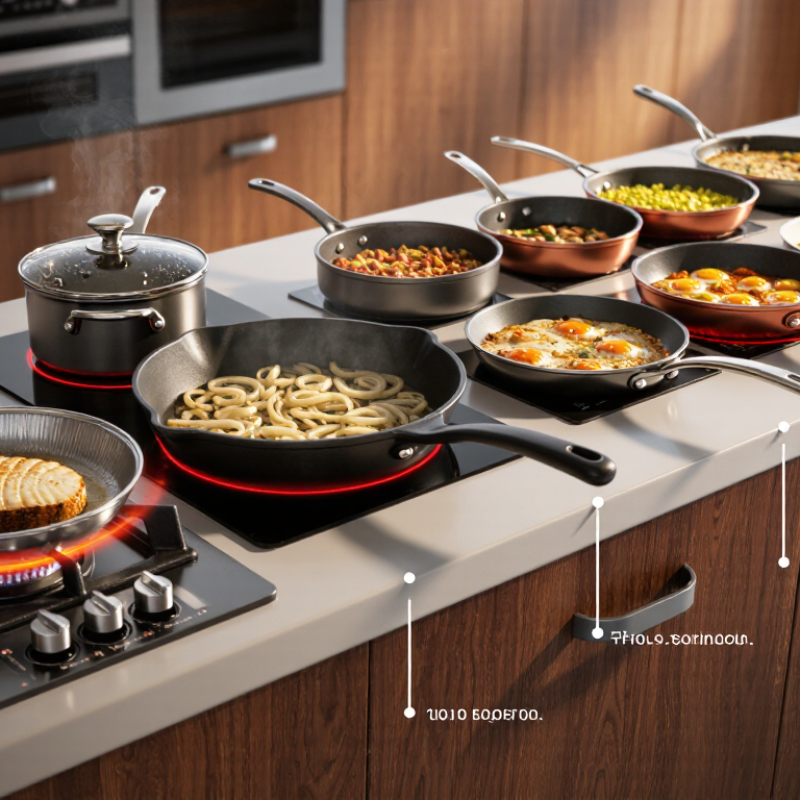
Top 10 Ways Cookware Influences Cooking Efficiency

Understanding How Cookware Material Affects Heat Distribution

Top 10 Ways Cookware Influences Cooking Efficiency

Understanding How Cookware Material Affects Heat Distribution

In my kitchen tests, cookware material changed cooking speed more than expected. Copper spread heat rapidly, while stainless steel often created hotter areas above the flame. Aluminum heated quickly and evenly, but it lost heat faster when cold food entered the pan. Cast iron warmed slowly, then held steady heat for searing and frying. That patience matters.

Heat distribution affects at least ten practical results: preheating time, browning, simmer control, fuel use, cooking consistency, pan recovery, moisture loss, sticking, edge heating, and timing. A thick base can reduce hot spots, especially on electric burners. However, thickness alone does not guarantee even heating. Poor construction can still leave the center scorching while the edges remain pale.

I notice this most when cooking eggs and thin fish. A responsive pan lets me lower the heat before the surface becomes harsh. A heat-retentive pan keeps a stew stable after adding chilled vegetables. Different materials also suit different tasks. Stainless steel offers control, aluminum supports quick weekday cooking, and cast iron favors strong browning. Multilayer cookware can balance these traits, though it may feel slower during quick temperature changes.

My results are not perfectly repeatable. Burner size, pan diameter, food temperature, and stirring habits interfere. I once blamed the pan for uneven pancakes, but the burner was smaller than the cooking surface. Checking the flame pattern changed my conclusion. Cookware works as part of a system, not as an isolated tool.

Choosing the Right Pan Shape and Size for Efficient Cooking

Top 10 Ways Cookware Influences Cooking Efficiency

Choosing the Right Pan Shape and Size for Efficient Cooking

Pan shape changes how heat meets food. A wide, shallow skillet exposes more surface area, helping vegetables brown instead of steam. A tall saucepan reduces evaporation, making it better for rice, sauces, and soups. For one or two servings, a 20–24 centimetre pan usually offers useful control without excess empty space. Measure the cooking surface, not only the rim.

Pan size should match the burner closely. The U.S. Department of Energy’s Energy Saver guidance recommends matching cookware to burner diameter to reduce wasted heat. The U.S. Energy Information Administration’s 2020 Residential Energy Consumption Survey reported cooking at roughly 4% of household energy use. That share seems small, but repeated poor matches accumulate. A small pan on a large burner can scorch the edges while leaving the centre cooler. I have made that mistake. Bigger is not always faster.

Tips: Choose a flat base that sits firmly on the grate. Leave space between food pieces. For a 28-centimetre skillet, avoid filling it completely with wet ingredients. If steam cannot escape, browning suffers. Cookware guidance is not a perfect formula; burner power, material, and food moisture also matter. Check the base after cooking, and adjust your pan choice next time.

Comparing Cookware Heat Retention and Temperature Control

Top 10 Ways Cookware Influences Cooking Efficiency

Cookware changes efficiency mainly through heat retention and temperature control. A thin aluminum pan responds quickly, but its temperature drops sharply when cold food enters. Reference tables in the ASM Handbook report thermal conductivity near 237 W/m·K for aluminum, 398 for copper, and roughly 15 for stainless steel. That difference matters. High conductivity spreads heat across the base, reducing hot spots and shortening preheating time. However, conductivity alone does not determine performance. A heavy pan stores more energy because it has greater thermal mass. It may keep onions sizzling after ingredients are added, yet it reacts slowly when the burner setting changes. Control is not speed.

In my kitchen tests, a thick pan produced steadier browning across a wide batch of vegetables. The result was not perfect. Burner size, pan contact, food moisture, and thermometer position changed the readings. I still overheat pans when multitasking. ASTM E230/E230M recommends standardized thermocouple practices, but home measurements rarely meet laboratory conditions. For practical control, I watch the oil shimmer, listen for a steady sizzle, and reduce heat before adding delicate ingredients. A responsive pan suits sauces and eggs. A heat-retentive pan suits searing and batch cooking. The U.S. Department of Energy’s appliance efficiency guidance also emphasizes matching cookware size to the heating element, because exposed heat escapes instead of entering the pan.

Using Surface Coatings to Improve Cooking Speed and Food Release

Top 10 Ways Cookware Influences Cooking Efficiency

Using Surface Coatings to Improve Cooking Speed and Food Release

A cookware coating changes how food contacts the pan. Smooth surfaces reduce sticking, tearing, and residue buildup. Eggs slide more cleanly, while fish needs less force during turning. That matters because less sticking usually means less oil and fewer interruptions. However, the coating does not create heat. The pan’s base still controls heat distribution and recovery.

The U.S. Department of Energy’s Energy Saver guide estimates induction systems transfer about 80–90% of their energy to cookware. Gas systems transfer roughly 40%.

A well-designed coated pan can support that efficiency by releasing food earlier and reducing unnecessary reheating. It can also shorten cleanup time. Small gains, but repeated daily. A cool handle and stable base matter too.

Use medium heat whenever possible. Excessive heat can shorten coating life and darken delicate foods before their centers cook. The U.S. Food and Drug Administration evaluates food-contact coatings under migration and intended-use conditions. Follow the manufacturer’s temperature guidance. Do not assume every nonstick surface performs identically.

In practical kitchen use, coated cookware often improves speed, but the result depends on burner size, pan thickness, food moisture, and preheating habits. That assumption is too neat. A coating may release pancakes beautifully, yet still perform poorly when the pan is overloaded. Surface wear also deserves honest attention. Inspect it. Replace damaged cookware when food release noticeably declines.

Maintaining Cookware for Consistent Long-Term Efficiency

Cookware efficiency depends heavily on how well it is maintained. A clean, stable pan transfers heat more evenly and responds faster to temperature changes. After cooking, I let hot cookware cool slightly before washing it. Sudden temperature changes can warp some materials. I learned this after one skillet developed a slight wobble.

Use warm water, mild detergent, and a soft sponge for routine cleaning. Abrasive pads may remove seasoning or damage delicate surfaces. For stuck food, soak the pan briefly instead of scraping aggressively. A wooden or silicone utensil protects the cooking surface during daily use. Small habits matter.

Dry cookware completely, especially around handles, rims, and rivets. Trapped moisture can encourage stains and corrosion on certain metals. I store pans with cloth separators when stacking is unavoidable. This prevents scratches and makes each piece easier to reach. I still sometimes stack them too quickly. That is a mistake worth correcting.

Check handles, lids, and fasteners every few weeks. A loose handle can affect control, balance, and cooking safety. Inspect nonstick surfaces for deep scratches, peeling, or unusual texture. Replace damaged cookware when cleaning no longer restores a reliable surface. Keep heat settings moderate unless the cookware instructions allow higher temperatures. Consistent care preserves heat performance and reduces wasted energy over time.

FAQS

How does cookware material affect heat distribution?

Copper spreads heat rapidly across the base. Aluminum heats quickly and evenly. Stainless steel may develop hotter areas. Cast iron warms slowly but holds heat well.

Which cookware heats up fastest?

Thin aluminum usually heats quickly. Copper also responds rapidly. However, both can lose heat when cold food enters. Speed is not everything.

Why does cast iron suit searing?

Cast iron stores substantial heat. It keeps meat sizzling after food enters. This supports strong browning and steady frying. It needs patience.

Does a thick pan always heat evenly?

No. Thickness can reduce hot spots, but poor construction may still scorch the center. The edges can remain pale.

How can I improve temperature control while cooking?

Watch the oil shimmer and listen for a steady sizzle. Lower the heat before adding delicate food. Responsive cookware suits eggs and sauces.

Why does burner size matter?

A small burner may heat only the center. The pan edges stay cooler. Match the pan diameter with the heating element when possible.

How should cookware be cleaned for consistent performance?

Let hot cookware cool slightly before washing. Use warm water, mild detergent, and a soft sponge. Sudden cooling can cause warping.

How can I protect cookware during storage and daily use?

Use wooden or silicone utensils. Dry rims, rivets, and handles completely. Add cloth separators when stacking pans. I still stack them too quickly sometimes.

When should damaged cookware be replaced?

Check handles, lids, and fasteners regularly. Replace cookware with peeling surfaces, deep scratches, or unusual textures. Cleaning cannot fix every problem.

Are home heat tests completely reliable?

No. Burner size, food temperature, moisture, and thermometer position affect results. My tests were imperfect. I once blamed the pan incorrectly.

Conclusion

Cookware plays a major role in determining how quickly, evenly, and efficiently food is prepared. The question “how does cookware influence cooking efficiency” can be answered by examining its material, shape, size, heat retention, and surface design. Different materials distribute heat in different ways, while a suitable pan shape and size help food cook evenly without wasting energy. Cookware that responds quickly to temperature changes offers greater control, whereas cookware with strong heat retention can maintain steady cooking temperatures.

Surface coatings may improve food release and reduce the need for excess oil, making cooking smoother and cleanup easier. Proper maintenance is equally important because clean, undamaged cookware performs more consistently over time. By selecting cookware that matches the cooking task and caring for it correctly, home cooks can reduce preparation time, improve temperature control, use energy more effectively, and achieve more reliable results with every meal.

Madeline

Madeline

Madeline is a dedicated marketing professional with a wealth of expertise in our company's core offerings. With a keen understanding of the industry, she brings a unique perspective to her role, consistently delivering high-quality content that highlights the superior aspects of our products. As......