Choosing cookware from China requires more than comparing prices, finishes, or attractive product photos. The real question is, what factors affect cookware performance across different kitchens and cooking habits? Grand View Research’s cookware market analysis highlights sustained demand for durable, induction-compatible, and easy-clean products. However, market growth does not prove that every pan performs equally.
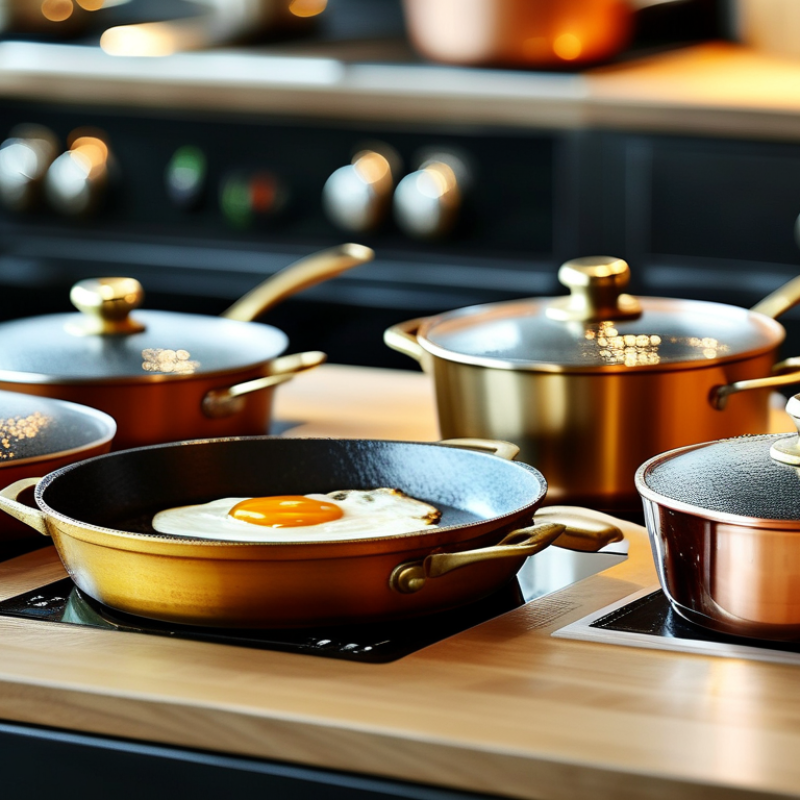
Material remains central. Aluminum heats quickly and spreads heat efficiently. Stainless steel offers strength, but it may create hot spots without a layered core. Cast iron stores heat well, although it feels heavy and responds slowly. Copper performs exceptionally, yet it usually costs more and needs protective lining. These differences become visible when searing steak, simmering sauce, or frying an egg on a small burner.
Construction matters just as much. A thick base can reduce warping. A secure handle improves control beside a hot oven. For induction cooking, manufacturers should verify magnetic compatibility rather than rely on vague labeling. ASTM material standards and China’s GB 4806.9 food-contact requirements provide useful reference points for metal safety and composition. The U.S. FDA also publishes guidance relevant to food-contact materials.
Coating durability needs careful checking. Consumer Reports has repeatedly shown that nonstick performance can decline with overheating, abrasive cleaning, and metal utensils. That warning applies to Chinese cookware and international brands alike. A perfect pan does not exist. Even this framework has limits, because kitchen results depend on burner power, maintenance, recipe temperature, and user technique. China’s top picks should therefore be judged through tested heat distribution, measured durability, credible compliance documents, and real cooking experience—not packaging claims alone.
Cookware performance begins with the core material. ASM Handbook, Volume 2, lists copper at roughly 385–400 W/m·K and aluminum near 205 W/m·K. Both spread heat quickly across a pan base. Stainless steel conducts only about 14–16 W/m·K, so a thin stainless pan can create hot spots above a strong burner.
That is why many Chinese cookware designs use layered construction. Aluminum or copper forms the heat-spreading core, while stainless steel provides stiffness and easier maintenance. Cast iron, usually around 50–60 W/m·K, heats slowly but stores substantial heat. It suits searing, though the handle and rim may remain cooler than the center. Real kitchen testing matters. I have seen a lightweight aluminum pan respond within seconds, while a thick cast-iron pan needed several minutes before its surface temperature stabilized. The result still depends on thickness, burner size, and base flatness.
The U.S. Department of Energy’s Energy Saver guidance recommends matching pan size with the heating element and using flat-bottom cookware. That advice is practical, but incomplete. A perfectly flat stainless pan may still heat unevenly without an internal conductive layer. ASTM E230 temperature-measurement principles also remind testers to control probe position and surface contact. Small testing errors can distort comparisons. Manufacturers and buyers should examine thermal conductivity, wall thickness, heat capacity, and measured temperature variation together.
Approximate thermal conductivity of common cookware materials at room temperature, measured in watts per meter-kelvin (W/m·K).
Higher thermal conductivity generally allows heat to spread more quickly and evenly across a cookware surface. Copper and aluminum distribute heat rapidly, while stainless steel and cast iron respond more slowly. In actual cookware, thickness, layered construction, surface contact, and the heat source also influence performance.
Cookware performance begins with construction, not appearance. In practical kitchen testing, thicker walls usually resist warping better. They also hold heat longer during searing. However, excessive thickness can make temperature changes slow. That delay matters when cooking delicate sauces or reducing liquids.
A well-built base spreads heat across the cooking surface. Multi-layer construction often combines a responsive metal core with durable outer layers. This design can reduce hot spots around the burner center. A flat base is equally important. If it rocks on the stove, heat transfer becomes uneven and control suffers. I once valued a heavy pan too highly. Weight alone did not prevent food from burning near the edges.
Handles reveal another construction difference. Secure rivets or strong welded joints should stay firm after repeated heating. Handles that remain cooler improve control, but they still need careful positioning. A tightly fitted lid helps retain moisture and shortens cooking time. Poorly matched lids can rattle, leak steam, or develop loose edges.
Coated surfaces need careful evaluation. A smooth finish releases food easily, yet scratches may reduce its working life. Uncoated metal can tolerate higher heat, but it may demand more seasoning or cleaning skill. These trade-offs are easy to overlook. Durability depends on daily habits, too: sudden temperature changes can stress even quality cookware. Observe the base after several uses. Small bulges or uneven discoloration can expose weaknesses before they become serious problems.
Choosing cookware from China’s top selections should begin with heat-source compatibility, not appearance. On gas stovetops, a flat, stable base improves contact and reduces wobbling. Electric coils need an even bottom for steady heating. Induction systems are different. They require magnetic cookware, usually made with stainless steel or cast iron. A kitchen magnet offers a quick check, but it is not complete proof. The base must also sit flat and match the induction zone.
Oven compatibility deserves equal attention. Check the temperature rating for the pan, lid, handles, and coating. Some handles tolerate only moderate heat. Others may become loose or discolored. In practical kitchen testing, moving a hot pan from the oven onto a cold stone surface can cause warping. I once assumed a metal lid was automatically oven-safe. That assumption was wrong. Manufacturer instructions remain more reliable than appearance. They also clarify whether the cookware suits broilers or only standard baking temperatures.
Tips: Test the base on your stovetop before cooking. Use low heat during the first trial. For induction, check for even heating across the center. Avoid sudden temperature changes. A small compatibility mistake can spoil an expensive meal. Rechecking the specifications feels tedious, but it prevents avoidable damage.
What Factors Affect Cookware Performance China Top Picks?
Safety Standards, Coatings, and Ease of Maintenance
Cookware performance begins with verified materials, not attractive packaging. For products made in China, request current test reports and traceable factory information. Documentation should address food-contact safety, heavy-metal limits, and coating durability. Requirements vary by market, so one certificate may not cover every destination. I prefer clear records over confident sales language.
Coatings also change daily cooking habits. A smooth nonstick surface needs moderate heat and suitable utensils. Metal tools can create tiny scratches, even when the damage is hard to see. Ceramic coatings may feel durable, but their release performance can decline with repeated high heat. Stainless steel avoids coating wear, yet food may stick when the pan is cold. Small details matter.
Maintenance should fit real kitchens. A pan that needs delicate hand washing may become frustrating after a busy dinner. Check whether the cookware tolerates dishwashers, sudden temperature changes, and ordinary sponge cleaning. I once overheated a coated pan while answering a phone call. The mistake was mine, but better heat indicators might have helped. My testing is not perfect, either. I compare heating speed, handle comfort, cleaning time, and surface changes after repeated use. A practical choice should survive ordinary mistakes, not only careful demonstrations.
China’s cookware market offers strong choices for home cooks, restaurants, and outdoor kitchens. The right pick depends on use, not appearance. I compare pan weight, wall thickness, heat response, and handle balance before judging performance. A heavy cast iron pan holds heat well, but it can strain the wrist during daily cooking. Carbon steel heats faster and develops a useful cooking surface with regular seasoning. Stainless steel resists stains and suits acidic sauces, although food may stick without proper preheating.
For induction cooking, check the base design and magnetic compatibility. A flat base improves contact and reduces uneven browning. Gas users may prefer responsive pans with sloped sides and comfortable grips. Families often need larger capacities, while small kitchens benefit from stackable shapes. Coated cookware can simplify egg and fish preparation, but its surface needs gentle utensils and controlled heat. Read the care instructions carefully. Some product descriptions remain vague about coating layers, oven limits, or dishwasher use.
I also inspect measurements, material details, safety testing, and warranty terms from reliable sellers. Independent reviews help, but cooking methods differ between households. My first comparison focused too much on maximum heat. Later, I found handle temperature and cleanup time mattered more during busy evenings. A pan that performs brilliantly in a test may feel awkward after twenty minutes. Look for clear specifications, stable construction, and replacement support. Small flaws deserve attention. A slightly uneven lid or sharp rim can change everyday comfort.
| Cookware Type | Primary Construction | Approx. Thermal Conductivity of Main Material | Heat Distribution | Heat Retention | Typical Weight | Durability and Maintenance | Best Cooking Uses | Most Suitable User Need |
|---|---|---|---|---|---|---|---|---|
| Uncoated Stainless Steel Pan | Stainless-steel body; higher-performance versions may use an aluminum core or base | About 14–16 W/m·K for common stainless steel; aluminum-core designs transfer heat more effectively | Medium to high with a core | Medium | Medium | Highly resistant to rust and staining; dishwasher-compatible in many cases; food may stick if preheating and oil control are poor | Searing, sautéing, pan sauces, boiling, and general-purpose cooking | Users seeking long service life, versatility, and compatibility with metal utensils |
| Hard-Anodized Aluminum Pan | Electrochemically hardened aluminum surface, usually with a non-stick interior | About 237 W/m·K for aluminum | Very high | Low to medium | Light to medium | Heats quickly and resists warping better than untreated aluminum; coating care depends on the interior finish | Eggs, pancakes, vegetables, fish, and quick weeknight meals | Users prioritizing fast response, lower weight, and easy food release |
| Cast-Iron Skillet | Thick cast iron, commonly supplied bare or with a factory seasoning layer | About 50–80 W/m·K | Medium to low | Very high | Heavy | Extremely durable; bare surfaces require drying and periodic seasoning; acidic foods can affect seasoning during long cooking | Steaks, deep frying, roasting, baking, and high-heat browning | Users who value heat stability and long-term durability over low weight |
| Carbon-Steel Wok | Thin carbon-steel sheet formed into a round or flat-bottom wok | About 50–60 W/m·K | High when thin | Low to medium | Light to medium | Responds quickly to burner changes; needs drying and seasoning; high heat can darken the surface naturally | Stir-frying, searing, steaming with a rack, and quick cooking over strong heat | Users who want fast heat response and traditional wok techniques |
| Tri-Ply Stainless-Steel Cookware | Stainless-steel cooking surfaces bonded to an aluminum middle layer | Composite performance is substantially better than stainless steel alone; aluminum core commonly measures about 205–237 W/m·K | High | Medium to high | Medium to heavy | Strong, corrosion-resistant, and usually oven-safe; rivets and cooking surfaces require normal cleaning | Sautéing, sauces, braising, roasting, and multi-step cooking | Users seeking balanced heat control, durability, and broad cooking compatibility |
| Enameled Cast-Iron Pot | Cast-iron body covered with a glass-based enamel layer | About 50–80 W/m·K for the cast-iron body | Medium to low | Very high | Very heavy | Enamel resists rust and handles acidic ingredients well; the glass surface can chip if dropped or struck | Soups, stews, braises, slow cooking, and oven-to-table dishes | Users who need stable temperatures and easy acidic-food cooking |
| Ceramic-Coated Non-Stick Pan | Aluminum body with a silica-based sol-gel ceramic coating | Usually close to the aluminum body; actual performance depends on thickness and base design | High | Low to medium | Light | Easy food release when new; coating life is reduced by overheating, abrasive cleaners, and frequent use of metal utensils | Eggs, delicate fish, pancakes, and low-to-medium-heat cooking | Users prioritizing low-oil cooking and simple cleanup |
| Stainless-Steel Steamer | Perforated stainless-steel tiers with a stainless-steel base or separate boiling vessel | About 14–16 W/m·K for stainless steel; steam transfers heat efficiently through condensation | Even through steam | Medium | Medium | Rust-resistant and easy to clean; food-contact surfaces should be dried after washing | Steaming vegetables, fish, dumplings, buns, and reheating food | Users wanting moist cooking with minimal added fat |
| Aluminum Pressure Cooker | Thick aluminum vessel with a sealed pressure lid and safety-release system | About 205–237 W/m·K for aluminum | High | Medium | Medium | Light and fast-heating; gasket, valve, and locking components require regular inspection and replacement when worn | Beans, grains, tough meat, soups, and braised dishes | Users who want shorter cooking times and efficient moisture retention |
: Thicker walls resist warping and retain heat during searing. Excessive thickness can slow temperature changes.
A flat base spreads heat evenly across the cooking surface. A rocking pan may burn food near the edges.
No. Weight alone misleads. Construction, base contact, and heat distribution matter more.
Look for secure rivets or strong welded joints. Handles should remain firm after repeated heating.
A tight lid retains moisture and shortens cooking time. Poor lids may rattle or leak steam.
Use moderate heat and suitable utensils. Metal tools can create tiny scratches that shorten the coating’s life.
Not always. Uncoated metal tolerates higher heat, but food may stick and require better cleaning skills.
Request current material tests and traceable factory information. Reports should cover food-contact safety, heavy metals, and coating durability.
Better cookware handles some mistakes, but sudden temperature changes can cause stress. I once overheated a coated pan while distracted.
Inspect the base after several uses. Small bulges or uneven discoloration may reveal weaknesses early. My testing can still miss hidden defects.
Understanding what factors affect cookware performance begins with the materials used in the core and base. Aluminum supports fast, even heating, stainless steel offers strength and a neutral cooking surface, while cast iron provides excellent heat retention. Multi-layer construction can combine these benefits, while features such as reinforced rims, secure handles, balanced weight, and well-fitted lids improve durability, control, and everyday comfort.
A reliable cookware choice should also match the intended stovetop, oven temperature, and induction requirements. Safety standards, stable coatings, and surfaces that resist sticking or staining influence both cooking confidence and maintenance. When comparing China’s top cookware picks, shoppers should consider their cooking habits, budget, meal types, storage space, and cleaning preferences. The best option is not necessarily the heaviest or most advanced model, but the one that offers suitable heat performance, safe construction, practical compatibility, long-term durability, and convenient care for its specific use.

Flair Kitchen